
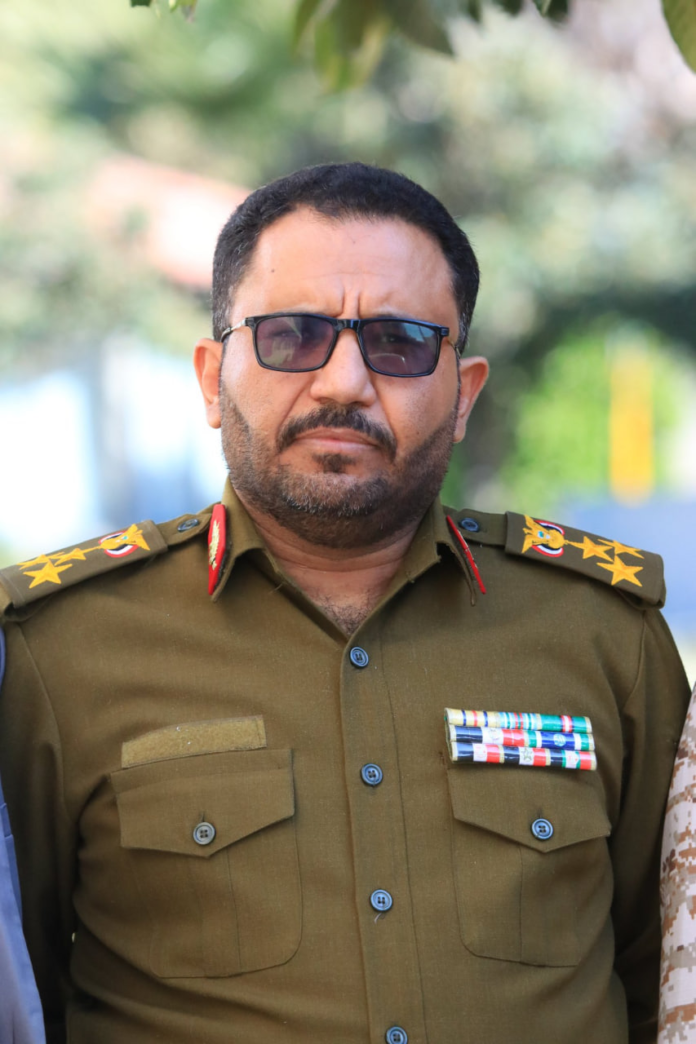
Brigadier General Abdullah Bin Amer, the Deputy Director of the Moral Guidance Department in Sana’a, affirmed that “the Yemeni people historically in the north and south were not separate,” explaining that “the real separation was between political forces linked abroad,” indicating that “the main dilemma facing Yemen in past decades was represented by foreign interventions.”
Follow-ups – Al-Khabar Al-Yemeni:
Bin Amer revealed that the international circumstances following the end of the Cold War and America’s victory over the Soviet Union “played a fundamental role in achieving Yemeni unity,” explaining that Washington “gave the authorities in North Yemen, which were allied with the West, an opportunity to annex South Yemen, which was allied with the Soviets,” according to an interview on Al-Masirah TV.
He explained that former President Ali Abdullah Saleh visited America in January 1990 “to get a green light to re-establish unity,” during which he pledged that the system of the Republic of Yemen after unity would be “an extension of the system of the Yemen Arab Republic” (i.e., loyal to the West), which “encouraged the Americans to support the plan.”
Bin Amer affirmed that “the US provided the northern regime with a map containing all military sites in the south” as part of a plan to invade the south (which was postponed).
He revealed that “Ali Abdullah Saleh, despite being one of the parties to achieving unity, was at the same time part of the conspiracy against unity,” pointing out that when the will of the north and south converged in the 1970s to achieve unity (between Presidents Salem Rabie Ali and Ibrahim Al-Hamdi), “the US instructed its followers in the north to assassinate Al-Hamdi,” and that “Ali Abdullah Saleh was a major part of the assassination operation.”
Bin Amer indicated that “one of the reasons for the 1994 war was the existence of American approval to end the military formations belonging to the People’s Democratic Republic of Yemen, whose armament and military doctrine were linked to the Soviet Union,” revealing that “the American ambassador at that time stated, while at the home of a Yemeni tribal sheikh, that the goal of the war was to ‘liquidate socialist influence’ in Yemen.”
The deputy director of the Moral Guidance Department in Sana’a stressed the need to “differentiate between the unity of the influential and the unity of the people,” which he said is “deeply rooted in the consciousness of Yemenis, and there is no disagreement about it,” affirming that “Yemenis will not be able to build their future except through a realistic and objective reading of their history.”
The assassination of Al-Hamdi and the 1994 war… Bin Amer reveals “conspiracies” that surrounded Yemeni unity since the 1970s
Al-Houthi: Saudi Arabia seeks to keep Yemen “subservient under its command with American supervision”… And our people will not accept foreign guardianship
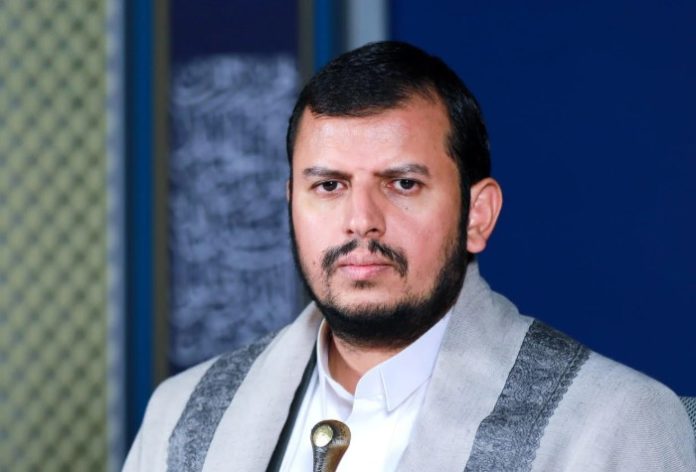
The leader of the Ansar Allah movement, Abdul-Malik Al-Houthi, affirmed on Friday that “the Saudi regime is moving very clearly and frankly to keep the Yemeni people subservient to it and under its orders, with American supervision,” pointing out that this regime “is also subject to American and British supervision,” and warning that “foreign guardianship poses a great threat to Yemen in its freedom, independence, present, and future.”
Sana’a – Al-Khabar Al-Yemeni:
Al-Houthi said in a speech coinciding with the anniversary of Yemeni unity that “the greatest threat to the entitlement of unity is the greed, personal, partisan, and factional calculations, and subordination to foreign powers,” adding that “the foreign powers seek total control over our people, confiscating their freedom and independence, and exploiting our country’s location and wealth.”
The leader of Ansar Allah stressed that “the most important guaranteeing factors for the unity of our people are two factors: consolidating the unifying faith identity and the liberating approach that preserves its independence,” pointing out that “the faith-based identity protects the people from all causes of division and the agendas worked on by foreign powers and their domestic arms.”
Al-Houthi accused the “components that have submitted to foreign powers” of squandering the people’s freedom and dignity and of moving “under agendas that stir sectarian and regional bigotry and incite animosity, hatred, and enmity,” describing them as “traitors from the country’s own people, dwarfs who can never comprehend that our people be free and who care only for their own gains and trivial ambitions.”
The leader of the Ansar Allah movement, Abdul-Malik Al-Houthi, affirmed that “our dear people will never accept being just one file among the files of the Saudi special committee, managed according to external calculations and interests,” stressing that “they will not accept remaining under the supervision of a quadruple committee consisting of the American, the British, the Israeli, and the Saudi,” and pledging that “our dear people, with their faith-based identity, are clinging to their freedom, steadfast on the path of liberation no matter the difficulties and challenges.”
Read also:
Al-Houthi: American and Israeli companies “deposit deadly poisons” in our food and medicine, and a boycott is a necessity for national security
Ansar Allah leader reveals: Saudi Arabia prevented oil extraction in Al-Jawf, Marib, and Al-Mahrah to keep Yemen subservient
Ansar Allah leader reveals: Saudi Arabia prevented oil extraction in Al-Jawf, Marib, and Al-Mahrah to keep Yemen subservient
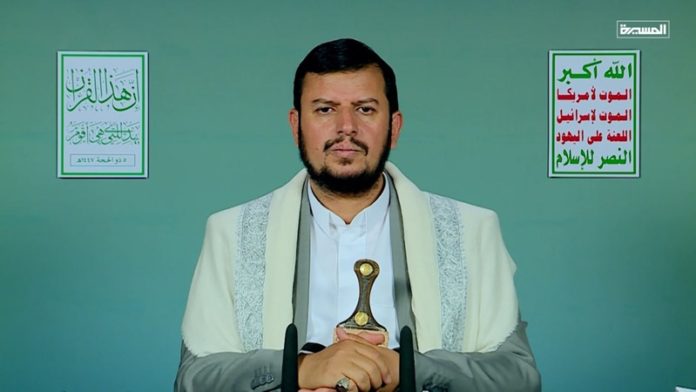
The leader of the Ansar Allah movement, Abdul-Malik Al-Houthi, revealed on Friday that “the Saudi regime prevented oil extraction in Al-Jawf governorate because Yemen would benefit, and it doesn’t want the Yemeni people to become a people living in dignity,” indicating that Riyadh also prevented the extraction of oil fields in Marib and Al-Mahrah and forced foreign companies to leave Al-Mahrah and Hadramout, as part of a policy “to keep Yemen subservient.”
Sana’a – Al-Khabar Al-Yemeni:
Abdul-Malik Al-Houthi stated that “the Yemeni Central Bank’s dollar balances aren’t in Sana’a but in America, and they are an entitlement of the Yemeni people,” pointing out that “the American and British control them” and adding that “a lot of money and economic interests in Arab countries are linked to America and Britain, and now there is a trend to link them to the Zionist enemy.”
He called for attention to the “economic boycott” as an influential pressure tool, pointing out that the US president, “when facing major economic problems in America, turns to Arab countries, foremost the Gulf, to obtain trillions of dollars,” asking, “The US president boasts and brags that he returned from the Gulf countries with a lot of money to solve problems and economic crises in America.” “He added, ‘Most Arab and Islamic funds go to America to the point that the volume of investment reaches $14 trillion.’
The leader of Ansar Allah warned that “there is a trend to link the region’s economy to transforming the import, export, and even oil export through occupied Palestine under Israeli control”, pointing out that “normalization is the umbrella under which they want to fully link the interests and wealth of this nation to the Zionist enemy.”
Al-Houthi affirmed that “the Saudi role is linked to the British and American, and it doesn’t have its own agenda; since the establishment of Saudi Arabia, it has been completely linked first to the British and then to the British and American,” stressing that “Saudi Arabia doesn’t want Yemen to have its economic resources that would make it independent of being subject to any other country.”
Read also: Al-Houthi: American and Israeli companies “deposit deadly poisons” in our food and medicine, and a boycott is a necessity for national security
اغتيال الحمدي وحرب 94.. بن عامر يكشف عن “مؤامرات” أحاطت بالوحدة اليمنية منذ السبعينيات
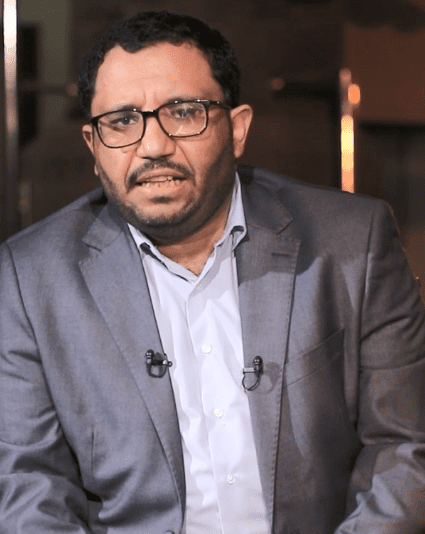
أكد العميد عبدالله بن عامر، نائب مدير دائرة التوجيه المعنوي بصنعاء، أن “الشعب اليمني تاريخياً في الشمال والجنوب لم يكن منفصلاً”، موضحاً أن “الانفصال الحقيقي كان بين القوى السياسية المرتبطة بالخارج”، مشيراً إلى أن “المعضلة الرئيسية التي واجهت اليمن خلال العقود الماضية تمثلت في التدخلات الخارجية”.
متابعات- الخبر اليمني:
وكشف بن عامر، أن الظروف الدولية التي أعقبت انتهاء الحرب الباردة وانتصار أمريكا على الاتحاد السوفيتي “لعبت دوراً أساسياً في تحقيق الوحدة اليمنية”، مبيناً أن واشنطن “منحت السلطات في شمال اليمن، التي كانت حليفة للغرب، فرصة ضم الجنوب اليمني المتحالف مع السوفيت”، وفق مقابلة على قناة “المسيرة”.
وأوضح أن الرئيس الأسبق علي عبدالله صالح أجرى في يناير 1990 زيارة إلى أمريكا “للحصول على ضوء أخضر لإعادة تحقيق الوحدة”، وتعهد خلالها بأن يكون نظام الجمهورية اليمنية بعد الوحدة “امتداداً لنظام الجمهورية العربية اليمنية” (أي موالياً للغرب)، وهو ما “شجع الأمريكيين على دعم الخطة”.
وأكد بن عامر أن “الولايات المتحدة زودت النظام في الشمال بخريطة تضم كافة المواقع العسكرية في الجنوب”، ضمن خطة لاجتياح الجنوب (تم تأجيلها).
وكشف أن “علي عبدالله صالح، رغم كونه أحد أطراف تحقيق الوحدة، كان في الوقت ذاته جزءاً من المؤامرة على الوحدة”، مشيراً إلى أنه عندما تلاقت إرادة الشمال والجنوب في سبعينيات القرن الماضي لتحقيق الوحدة (بين الرئيسين سالم ربيع علي وإبراهيم الحمدي)، “أوعزت الولايات المتحدة لأتباعها في الشمال باغتيال الحمدي”، وأن “علي عبدالله صالح كان جزءاً رئيسياً في عملية الاغتيال”.
وأشار بن عامر إلى أن “أحد أسباب حرب 94 تمثل في وجود موافقة أمريكية لإنهاء التشكيلات العسكرية التابعة لجمهورية اليمن الديمقراطية الشعبية، والتي كان تسليحها وعقيدتها العسكرية مرتبطة بالاتحاد السوفيتي”، كاشفاً أن “السفير الأمريكي صرح حينها، خلال تواجده في منزل أحد مشائخ قبائل اليمن، بأن هدف الحرب كان ‘تصفية النفوذ الاشتراكي’ في اليمن”.
وشدد نائب مدير دائرة التوجيه المعنوي في صنعاء على ضرورة “التفريق بين وحدة النافذين ووحدة الشعب”، التي قال إنها “مترسخة في وجدان اليمنيين ولا خلاف عليها”، مؤكداً أن “اليمنيين لن يتمكنوا من بناء مستقبلهم إلا من خلال قراءة تاريخهم قراءة واقعية وموضوعية”.
Al-Houthi: American and Israeli companies “deposit deadly poisons” in our food and medicine, and a boycott is a necessity for national security
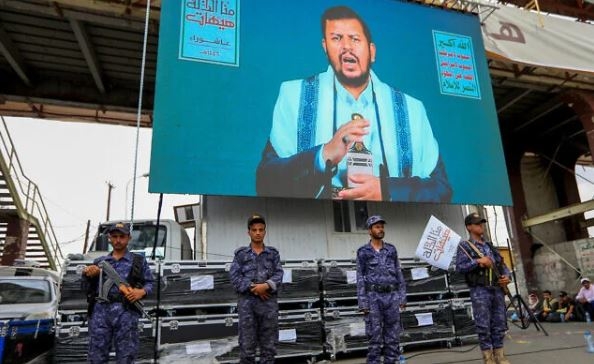
The leader of the Ansar Allah movement, Abdul-Malik Al-Houthi, revealed that “Zionist and American companies deposit deadly poisons in food and pharmaceutical products, and then we buy them with our money and give them enormous profits in return,” indicating that “investigations in America have definitively proven that major companies in the West deposit in their consumer products what harms people’s health and spreads many fatal diseases.”
Sana’a – Al-Khabar Al-Yemeni:
Al-Houthi said in a speech that “America provided quantities of wheat at one stage as a donation from organizations, and it was subjected to nuclear radiation in a way that causes cancer,” warning against relying on enemies to secure food, medicine, clothing, and life’s necessities.
The leader of Ansar Allah affirmed that “the importance of an economic boycott lies in liberation from the enemies’ control and domination over peoples,” pointing out that “a boycott can be an incentive for local production as it is a necessity for national and food security.”
He added, “It is absolutely not permissible for our dependence to obtain our food, medicine, clothing, and life’s necessities from our enemies.”
Al-Houthi denounced that “there is a list of 50 countries from which merchants of Yemen import very simple things that can be manufactured locally with great ease,” asking, “Are businessmen still importing ‘sauce,’ which is among the simplest things that can be produced locally abundantly and without difficulty?”
He pointed out that “non-Islamic countries make food security one of the most important headings of national security,” warning that “when peoples remain dependent on others, they become vulnerable to pressure and their essential needs turn into pressure cards in the hands of their enemies.”
The leader of Ansar Allah called for “directing the matter towards local production and shifting capital inward to bring about an economic renaissance”, indicating that “agriculture itself will be the backbone of the national economy” and denouncing the lack of attention to “the developmental and economic field in school and university curricula” and the media’s focus on “chatter” instead of production.
الحوثي: شركات أمريكية وإسرائيلية “تودع السموم القاتلة” في غذائنا ودوائنا والمقاطعة ضرورة للأمن القومي
كشف قائد حركة أنصار الله، عبد الملك الحوثي، أن “الشركات الصهيونية والأمريكية تودع السموم القاتلة في المنتجات الغذائية والدوائية ثم نشتريها بأموالنا ونعطيهم على ذلك الأرباح الهائلة”، مشيراً إلى أن “تحقيقات في أمريكا أثبتت قطعاً أن الشركات الكبرى في الغرب تودع في منتجاتها الاستهلاكية ما يضر بصحة الناس وينشر الكثير من الأمراض الفتاكة”.
صنعاء- الخبر اليمني:
وقال الحوثي، في كلمة له، إن “أمريكا قدمت كميات من القمح في مرحلة من المراحل على أنه هبة من المنظمات، وهو مما خضع للإشعاع النووي بطريقة تورث مرض السرطان”، محذراً من الاعتماد على الأعداء في تأمين الغذاء والدواء والملابس وضروريات الحياة.
وأكد قائد أنصار الله أن “أهمية المقاطعة الاقتصادية هي في التحرر من سيطرة الأعداء وتحكمهم بالشعوب”، مشيراً إلى أن “المقاطعة يمكن أن تكون حافزاً للإنتاج المحلي كما هي مسألة ضرورية للأمن القومي والغذائي”.
وأضاف: “لا يجوز إطلاقاً أن يكون اعتمادنا في الحصول على غذائنا ودوائنا وملابسنا وضروريات حياتنا على أعدائنا”.
واستنكر الحوثي أن “هناك قائمة مكونة من 50 بلداً يستورد منها تجار اليمن أشياء بسيطة للغاية يمكن صناعتها محلياً بكل بساطة”، متسائلاً: “لا يزال رجال المال والأعمال يستوردون ‘الصلصة’ وهي من أبسط ما يمكن إنتاجه محلياً بوفرة ومن دون عناء”.
وأشار إلى أن “دولاً غير إسلامية تجعل الأمن الغذائي من أهم عناوين الأمن القومي”، محذراً من أن “حينما تبقى الشعوب معتمدة على الآخرين، تكون عرضة للضغط وتتحول احتياجاتها الضرورية إلى أوراق ضغط بيد أعدائها”.
ودعا قائد أنصار الله إلى “اتجاه المسألة إلى الإنتاج المحلي وتحول رؤوس الأموال إلى الداخل لإحداث نهضة اقتصادية”، مشيراً إلى أن “الزراعة بحد ذاتها ستكون العمود الفقري للاقتصاد الوطني”، ومستنكراً غياب الاهتمام “بالمجال التنموي والاقتصادي في المناهج الدراسية والوسط الجامعي”، وتركيز الإعلام على “الثرثرة” بدلاً من الإنتاج.
قائد أنصار الله يكشف: السعودية منعت استخراج النفط في الجوف ومأرب والمهرة لتبقي اليمن “خاضعاً”
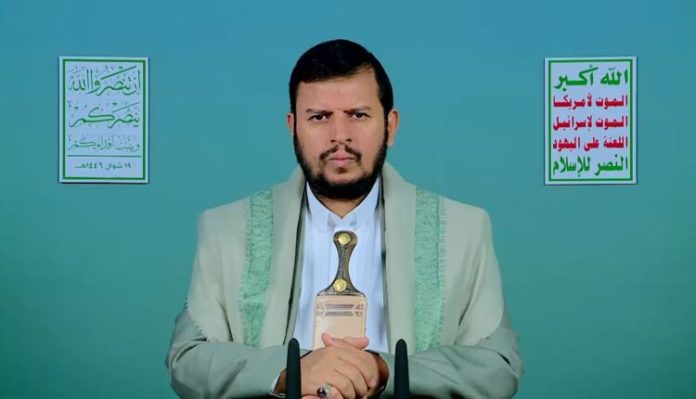
كشف قائد حركة أنصار الله، عبد الملك الحوثي، اليوم الجمعة، أن “النظام السعودي منع استخراج النفط في محافظة الجوف لأن اليمن سيستفيد، وهو لا يريد أن يتحول الشعب اليمني إلى شعب يعيش بكرامة”، مشيراً إلى أن الرياض منعت أيضاً استخراج حقول نفطية في مأرب والمهرة، وأرغمت شركات أجنبية على مغادرة المهرة وحضرموت، في إطار سياسة “لإبقاء اليمن خاضعاً”.
صنعاء- الخبر اليمني:
وقال عبد الملك الحوثي، إن “أرصدة البنك المركزي اليمني بالدولار ليست في صنعاء، بل هي في أمريكا، وهي استحقاق للشعب اليمني”، مشيراً إلى أن “الأمريكي والبريطاني يتحكم بها”، ومضيفاً أن “كثيراً من الأموال والمصالح الاقتصادية في البلدان العربية مرتبطة بأمريكا وبريطانيا، والآن هناك توجه لربطها بالعدو الصهيوني”.
ودعا إلى الاهتمام بـ”المقاطعة الاقتصادية” كأداة ضغط مؤثرة، مشيراً إلى أن الرئيس الأمريكي “عند مواجهة مشاكل اقتصادية كبيرة في أمريكا يتجه إلى البلدان العربية وفي المقدمة الخليجية للحصول على تريليونات الدولارات”، متسائلاً: “الرئيس الأمريكي يتفاخر ويتباهى بأنه عاد من الدول الخليجية بالأموال الكثيرة التي يحل بها مشاكل وأزمات اقتصادية في أمريكا”. وأضاف: “معظم الأموال العربية والإسلامية تذهب إلى أمريكا لدرجة أن يصل حجم الاستثمار إلى 14 تريليون دولار”.
وحذر قائد أنصار الله من أن “هناك توجه لربط اقتصاد المنطقة بتحويل عملية الاستيراد والتصدير وحتى تصدير النفط من خلال فلسطين المحتلة تحت السيطرة الإسرائيلية”، مشيراً إلى أن “التطبيع هو المظلة التي يريدونها لربط مصالح وخيرات هذه الأمة بشكل كامل بالعدو الصهيوني”.
وأكد الحوثي أن “الدور السعودي مرتبط بالبريطاني والأمريكي وليس له أجندة خاصة به، منذ نشأة السعودية وهو مرتبط كلياً بالبريطاني أولاً ثم بالبريطاني والأمريكي ثانياً”، مشدداً على أن “السعودية لا تريد لليمن أن يكون له موارده الاقتصادية التي تغنيه عن أن يكون خاضعاً لأي بلد آخر”.
الحوثي: السعودية تسعى لبقاء اليمن “خاضعاً تحت أمرها بإشراف أمريكي”.. وشعبنا لن يرضى بالوصاية الأجنبية
أكد قائد حركة أنصار الله، عبد الملك الحوثي، اليوم الجمعة، أن “النظام السعودي يتجه بكل وضوح وصراحة لبقاء الشعب اليمني خاضعاً له تحت أمره ونهيه وبإشراف أمريكي”، مشيراً إلى أن هذا النظام “يخضع أيضاً للإشراف الأمريكي والبريطاني”، ومحذراً من أن “الوصاية الأجنبية تشكل تهديداً كبيراً لليمن في حريته واستقلاله وحاضره ومستقبله”.
صنعاء- الخبر اليمني:
وقال الحوثي، في كلمة له تزامنت مع ذكرى الوحدة اليمنية، إن “أكبر ما يهدد استحقاق الوحدة هو الأطماع والحسابات الشخصية والحزبية والفئوية والارتهان للخارج”، مضيفاً أن “الخارج يسعى للسيطرة التامة على شعبنا ومصادرة حريته واستقلاله واستغلال موقع بلدنا وثرواته”.
وشدد قائد أنصار الله على أن “أهم العوامل الضامنة لوحدة شعبنا عاملان، وهما: ترسيخ الهوية الإيمانية الجامعة، والنهج التحرري الذي يحافظ على استقلاله”، مشيراً إلى أن “الهوية الإيمانية تصون الشعب من كل أسباب الفرقة والعناوين التي تعمل عليها القوى الخارجية وأذرعها في الداخل”.
واتهم الحوثي “المكونات التي خضعت للقوى الخارجية” بالتفريط في حرية الشعب وكرامته، وبالتحرك “تحت عناوين تثير النعرات الطائفية والمناطقية وإثارة العداوة والبغضاء والكراهية”، واصفاً إياهم بأنهم “خونة من أبناء البلد، أقزام لا يستوعبون أبداً أن يكون شعبنا حراً، ولا يهمهم إلا تحقيق مكاسبهم وأطماعهم التافهة”.
وأكد قائد أنصار الله عبد الملك الحوثي، أن “شعبنا العزيز لن يقبل أبداً أن يكون مجرد ملف من ملفات اللجنة الخاصة السعودية، يدار وفق حسابات ومصالح خارجية”، مشدداً على أنه “لن يقبل أن يظل تحت إشراف لجنة رباعية من الأمريكي والبريطاني والإسرائيلي والسعودي”، ومتعهداً بأن “شعبنا العزيز بهويته الإيمانية متمسك بحريته، ثابت على نهج التحرر مهما كانت الصعوبات والتحديات”.
Intelligence information: The arms race explodes in the Gulf as Emirati-Saudi disagreements escalate
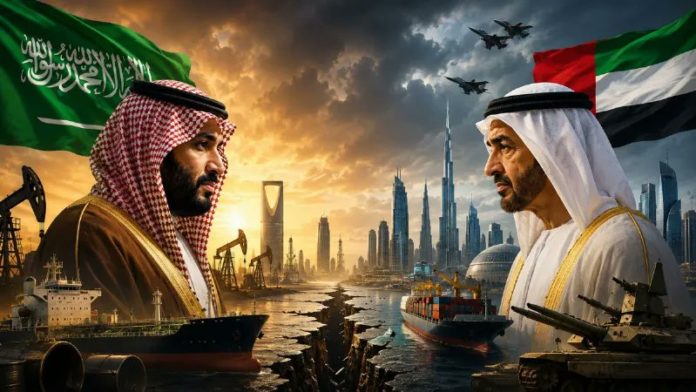
Intelligence information revealed on Thursday an escalating arms race between the UAE and the Kingdom of Saudi Arabia after the dispute between the two sides enters a more dangerous phase where political differences are being surpassed by a strategic conflict over military alliances, influence, and the future structure of Gulf security, particularly in the post-war on Iran phase.
Exclusive Follow-ups – Al-Khabar Al-Yemeni:
According to what the “Dark Box” website published, citing intelligence information, “the simultaneous military deployment—Pakistani forces inside Saudi Arabia versus Egyptian forces inside the UAE—shows each party’s tendency to build separate security axes instead of maintaining a unified Gulf security system, amid fears of regional escalation involving Iran on one side and Israel and the US on the other.”
The website affirms in its report that “the region is no longer dealing with the Saudi-Emirati dispute as merely temporary differences between partners.” According to intelligence assessments, it is moving towards an increasing division into competing military camps, driven by divergent regional visions and different security calculations, with declining levels of trust between the two most powerful Gulf states.”
The report explains the difference in paths between the two sides, indicating that Saudi Arabia deals with the post-Iran war environment through strategic frameworks focusing on deterrence, stability, and long-term security partnerships to protect economic transformation and internal stability. Meanwhile, according to the report, the UAE tends to expand its integration into security and military alliances linked to the US and Israel while expanding intervention networks regionally.
It noted that the recent Saudi-Pakistani military deployment is among the most prominent indicators of this shift, as the Reuters agency revealed Pakistan’s deployment of thousands of soldiers, advanced fighter jets, drones, and Chinese-made HQ-9 air defense systems inside Saudi Arabia, under the joint strategic defense agreement between the two countries.
It added that security officials described this force as a high-efficiency deployment aimed at supporting Saudi defenses in the event of any future regional escalation.
It noted that Saudi Arabia’s increasing reliance on Pakistani military support reflects escalating Saudi fears of regional instability after the war with Iran, particularly following Iranian missile and drone attacks that exposed the vulnerability of Gulf infrastructure, energy facilities, aviation, and strategic economic projects.
It explained that Riyadh is increasingly aware that protecting internal stability and the economic ambitions of Vision 2030 require enhancing defensive capabilities while avoiding engagement in any regional escalation that might threaten the Kingdom’s economic transformation plans.
Read also: American agency reveals Emirati attempts to implicate Gulf countries in the war against Iran
The UAE Heads in a Different Direction:
It indicated that the UAE appears to be heading in a completely different direction, as Abu Dhabi sees military-security integration and strong regional presence as two fundamental pillars of its geopolitical strategy.
It affirmed that the positioning of Egyptian Rafale aircraft and Egyptian military personnel inside Emirati territory has become one of the most prominent manifestations of this new security doctrine.
It explained that this deployment is officially presented as part of Arab security cooperation and Gulf defense coordination, yet its timing, coinciding with the resumption of negotiations concerning the Sudanese Armed Forces and the Rapid Support Forces, has sparked wide controversy in the region.
It noted that regional political circles interpreted this timing as an indication that Abu Dhabi is using security arrangements and Gulf military partnerships to influence the outcomes of the Sudanese crisis and enhance its regional influence.
The Sudanese Crisis as a Pivotal Element:
It added that despite the absence of official evidence confirming conditional arrangements linking Egyptian military support to Sudan negotiations, this perception itself has become politically highly sensitive.
It explained that many observers see this as a reflection of a broader Emirati strategy based on integrating military cooperation with political negotiations, economic influence, and regional influence operations within a unified geopolitical framework.
It affirmed that the Sudanese crisis remains a pivotal element for understanding these tensions, explaining that Egypt views Sudan from the perspective of national security, Nile water policies, Red Sea stability, and maintaining central state institutions, while Saudi Arabia leans towards a policy of containment and stability to protect Red Sea security and prevent long-term regional chaos.
It noted that the UAE is accused in regional political discourse of adopting a more interventionist strategy, relying on parallel security networks and supporting competing political actors inside Sudan.
Read also: The revelation of a secret visit by Netanyahu to the UAE during the war on Iran
Disparity Reflects the Depth of Division:
It explained that this disparity reflects the depth of the Saudi-Emirati division, which has now appeared on several regional fronts, after years of close partnership in Yemen, Gulf security, energy policies, and regional diplomacy.
It clarified that relations between the two countries have gradually deteriorated due to disagreements over OPEC production policies; economic competition; relations with Iran; influence in the Red Sea, Sudan, and Yemen; in addition to the growing Emirati relations with Israel.
It indicated that the Iranian war contributed to accelerating this fragmentation, as Saudi Arabia adopted a cautious stance focused on de-escalation and avoiding a wide war to protect the economy, internal stability, and investor confidence.
It added that the UAE, in contrast, moved towards adopting a more hardline security stance, closely linked to coordination with Washington and Tel Aviv, raising Gulf concerns that Abu Dhabi is contributing to turning the region into a wider geopolitical confrontation arena.
It revealed that secret intelligence sources speak of growing concern among Gulf officials about the emergence of competing military blocs within the Gulf Cooperation Council itself, instead of the Council remaining a unified security organization.
It explained that the deepening Saudi alliance with Pakistan reflects a traditional defensive framework based on deterrence and stability, while the UAE is working to build a separate axis based on advanced military integration, external partnerships, and wider geopolitical interventions.
It noted that the emergence of parallel military and security systems within the Gulf threatens to entrench long-term regional fragmentation, instead of enhancing collective Gulf security.
It added that the current arms race increases mistrust, polarization, and competition among Gulf powers themselves and also raises serious fears of the expansion of any future war between Iran on one side and Israel, the US, and their regional allies on the other.
It explained that the presence of Pakistani forces inside Saudi Arabia and Egyptian forces inside the UAE could quickly lead to the internationalization of any future regional confrontation and expand its scope.
It affirmed that the economic repercussions could be equally severe, as Gulf stability depends on energy security, air and sea navigation, and investor confidence, all factors threatened by the expansion of competing military alliances.
Fears of Emirati-Israeli Integration:
It noted that critics warn that the Gulf is moving towards a model resembling competing regional military camps, instead of maintaining traditional Gulf strategic coordination.
It added that the growing Emirati military integration with Israel increases Arab concerns, as many see Abu Dhabi’s strategy as contributing to militarization, polarization, and instability instead of supporting collective Arab security.
The report concluded by affirming that the Saudi-Emirati dispute is no longer merely a political difference between two Gulf states but has transformed into a wider strategic conflict over regional leadership, military doctrine, alliance structures, and the future of Gulf security.
It noted that the simultaneous expansion of Pakistani military deployment inside Saudi Arabia and Egyptian deployment inside the UAE represents an indicator of the emergence of competing Gulf security structures, shaped by divergent geopolitical visions and increasing regional mistrust.
It affirmed that the Gulf region is entering one of its most fragile and dangerous phases, amid escalating arms races, competing alliances, and geopolitical tensions threatening to reshape the regional order in a more turbulent and militarized manner.
Source: “Dark Box” + Al-Masaa Press
American report: The cost of the war on Iran is prompting the US Army toward an unprecedented financial crisis

Follow-ups – Al-Khabar Al-Yemeni:
ABC News revealed today, citing officials and internal documents, that the US Army has canceled dozens of medical training courses amid a financial shortfall estimated in the billions of dollars as pressures from the war on Iran and the expansion of US military operations escalate.
The network reported that the financial crisis has begun to cast its shadow on various sectors of the US Armed Forces, coinciding with rising war costs and increasing fuel prices, which was directly reflected in training programs and operational spending within the army.
ABC News quoted a US official as saying that the current financial crisis within the army represents a “storm” resulting from rising costs and the increasing volume of military operations, referring to the escalating burdens facing the US military establishment in recent times.
The network added that the sharp rise in fuel prices has forced the US Army to impose strict scrutiny on travel and movement expenses for soldiers as part of austerity measures aimed at curbing continuous financial depletion.
According to the report, the war on Iran and the increased US military deployment in several regions have significantly drained the army’s budget, prompting the Pentagon to prepare to request additional funding from Congress to cover the escalating costs of the war and ongoing military operations.