
Exclusive Follow-ups – Al-Khabar Al-Yemeni:
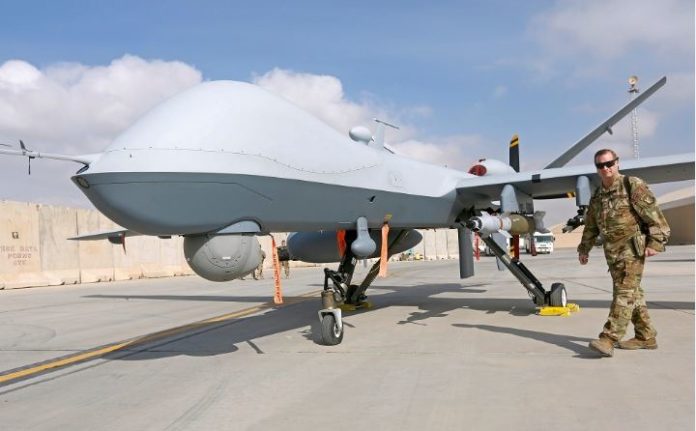
The American agency “Bloomberg” revealed on Thursday that the United States has lost between 24 and 30 MQ-9 Reaper drones since the start of the war on Iran on February 28, with financial losses estimated at approximately $1 billion, at a time when the fleet of these aircraft has fallen below the required operational minimum.
Reports indicate that the number of destroyed Reaper drones is “higher than previous estimates.”
A Congressional Research Service (CRS) report issued on May 12 had documented the destruction of 24 aircraft, but the actual number “may reach more than 30, including those damaged and subsequently withdrawn from service.”
The value of a single aircraft is estimated at about $30 million, bringing the total losses to approximately $1 billion.
This revelation comes a week after Pentagon officials warned during a Senate hearing on May 12 that the MQ-9 Reaper fleet had declined to only about 135 aircraft, which is “far below the required operational minimum of 189 aircraft.”
The shortfall of 54 aircraft represents a genuine crisis for the US Air Force, especially as the production line for these aircraft has stopped, and there are not enough spare parts to assemble more than 10 new aircraft.
The losses of Reaper drones add to the escalating war bill, which has consumed thousands of advanced munitions, including Tomahawk cruise missiles and JASSM-ER missiles.
The Pentagon had estimated the total cost of military operations in Iran at about $29 billion as of May 12, but American officials familiar with internal assessments told CBS News that “the real price of the operation so far is approaching $50 billion.”
The Congressional Research Service report estimates that the total cost of aircraft losses and replacement programs may eventually exceed $7 billion.
Bloomberg: America loses $1 billion worth of MQ-9 drones since the start of the war on Iran
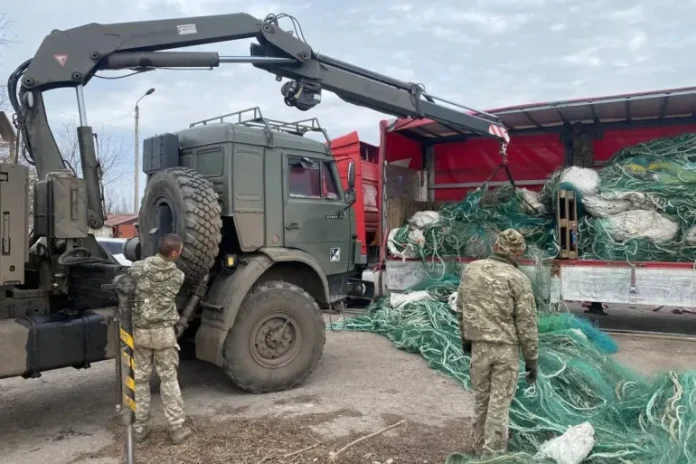
Evidence of incapacity… The Israeli army resorts to fishermen to secure nets to obstruct Hezbollah’s drones
Follow-ups – Al-Khabar Al-Yemeni:
Israeli press reports, including from “Maariv” newspaper, have revealed that the Israeli army is facing field difficulties in dealing with the threat of drones used by Hezbollah forces on the northern front with Lebanon.
Information indicates that Israeli army units in southern Lebanon, despite the military establishment announcing they have been supplied with large quantities of protective nets specifically designed to counter drones, have in some cases resorted to using fishing nets collected from local communities working in fish farming, aiming to enhance protection from these low-altitude aerial attacks.
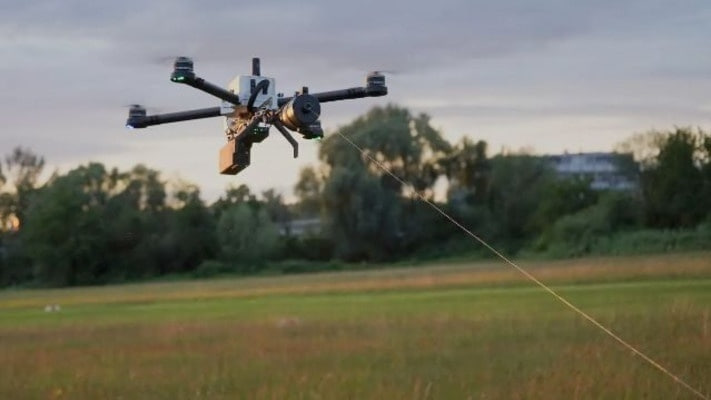
These measures come amid the escalating use of attack drones by Hezbollah, which have proved effective in bypassing traditional monitoring systems, prompting the Israeli army to seek quick and unconventional solutions to plug defensive gaps on the northern border.
According to the same reports, these nets are used as a relatively primitive field method to intercept or obstruct drones before they reach their targets, at a time when military officials acknowledge significant technical challenges in confronting this type of attack.
The war on Iran… Gulf losses approach $400 billion

Follow-ups – Al-Khabar Al-Yemeni:
Economic estimates indicate that the losses incurred by Gulf countries as a result of the repercussions of the war on Iran may approach $400 billion, reflecting the magnitude of the significant economic cost imposed by the escalation in the region.
The estimates show that these losses have affected key sectors including energy, trade, tourism, investment, and financial markets, reflecting the widening economic impact beyond the scope of direct military confrontations.
With the continuation of escalation rounds, fears are growing of rising cumulative losses, which could multiply pressures on the region’s economies and increase future risk levels.
Hebrew newspapers acknowledge a state of “Anger and Frustration” in the occupation forces following their major failure in southern Lebanon
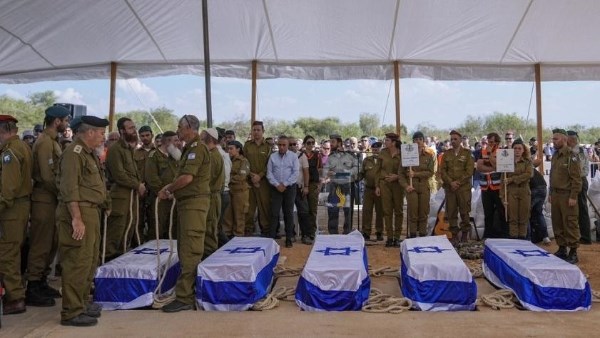
Hebrew media revealed today a state of “growing confusion” and “widespread frustration” within the ranks of the occupation army on the southern Lebanese front, with frank admissions from senior officers that the field scene is “complex” and objectives are “blurry,” amid a rising toll of injuries from drones.
Lebanon – Al-Khabar Al-Yemeni:
The Haaretz newspaper quoted officers fighting on the ground as saying they “do not clearly understand the leadership’s strategy” and that their tasks have become “limited to demolishing homes in Lebanese villages,” an admission reflecting the “absence of a clear vision” for the military operation. A number of military personnel affirmed that “injuries resulting from drone attacks are continuously increasing,” further complicating the scene.
The Israel Hayom newspaper indicated that “remaining in Lebanon is no longer achieving tangible achievements,” amid ambiguity about whether the leadership seeks a ceasefire or to continue the war. The newspaper explained that the restrictions on targeting Beirut and the Bekaa have pushed the enemy forces to “focus their strikes only on southern villages,” at a time when some officers believe the army is “incapable of using its full power.”
Maariv concluded its report by affirming that the challenges on the Lebanese front are “worsening day by day,” with internal demands for the need to “clarify the mission or consider withdrawal.”
The public admissions by occupation force officers are further confirmation of a state of collapsed deterrence and morale. The entity’s generals, accustomed to marketing “certain victory” to their audience, now admit that their forces are “demolishing homes” without achieving any field achievement and that soldiers are being injured daily by resistance drones that Israeli technology is unable to intercept.
This crisis places the Zionist leadership (military and political) before an “existential dilemma”: either admit failure and withdraw (which means a strategic defeat) or continue in the “quagmire” and bear high daily losses without a clear horizon.
In both cases, it seems that the prestige of the “invincible army” has been shattered on the borders of southern Lebanon in favor of the resistance doctrine that has proven that “determination and blood” can defeat “silicon and technology.”
245prisoners from Saudi prisons… Sana’a reveals new details about a major exchange deal
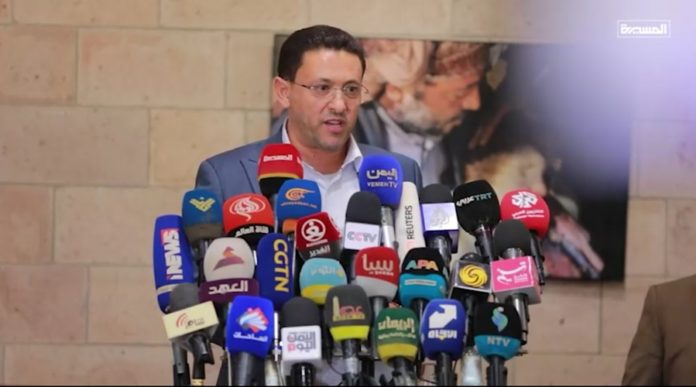
The head of the National Committee for Prisoners’ Affairs in Sana’a, Abdulqader Al-Murtada, announced on Thursday details of a major prisoner exchange deal, scheduled to be implemented on July 10, describing it as the “largest and most extensive in terms of numbers,” and affirming that it reflects “a clear negotiating superiority.”
Sana’a – Al-Khabar Al-Yemeni:
Al-Murtada explained that the deal includes 1,700 prisoners and detainees from both sides, consisting of “one thousand and one hundred prisoners and detainees from our side, compared to five hundred and eighty prisoners from the other side,” indicating the success of the Sana’a delegation in imposing a wide-scale humanitarian equity equation across various confrontation fronts.
He revealed the distribution of prisoners released from Sana’a’s side according to fronts, where Marib fronts received the largest number with 388 prisoners and detainees, followed by Saudi prisons from which 245 prisoners and detainees will be released; then the southern fronts with 200, coastal fronts with 186, and Taiz fronts with 68, affirming the comprehensiveness of the deal and that no arena of steadfastness was excluded.
Abdulqader Al-Murtada also revealed that among the 1,100 prisoners to be released are about 400 civilian and abducted detainees “who were arbitrarily snatched from roads, airports, workplaces, and from inside their homes and were thrown into the darkness of prisons without any legal justification.”
He added that some of these civilian detainees “have spent nearly 7-8 years in prison away from their families,” in reference to the scale of human suffering caused by the coalition’s war on Yemen.
The head of the Prisoners’ Committee in Sana’a described the deal as a “victory for both political and humanitarian will together,” praising the role of the revolutionary, political, and military leadership in achieving this achievement and affirming that this breakthrough represents a “major message of hope” laying the groundwork for future stages of clearing prisons and completely ending this humanitarian file.
Iran places the Emirati coast under its sovereignty amid anticipation of an agreement with America
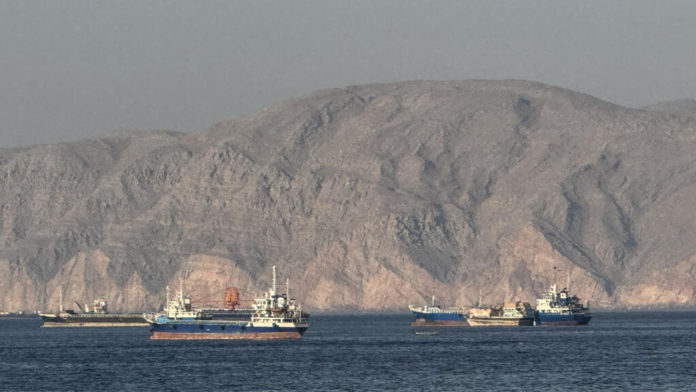
Iran revealed on Thursday the mechanism for managing the Strait of Hormuz, on the eve of reports of an anticipated agreement with America.
Exclusive – Al-Khabar Al-Yemeni:
The new mechanism includes complete control over maritime influence in the Strait of Hormuz.
Iran explained, according to its media, that the new what it called “administrative monitoring zone” will extend from the Iranian Jebel Mubarak to the south of Fujairah in the east and from the Iranian Qeshm Island to the Emirati Umm Al Quwain in the west.
The measures include the necessity of obtaining prior permission for ships to transit through the zone.
The UAE was the most prominent Gulf country that engaged in the American-Israeli war on Iran.
It is unclear whether Iran’s decision to place the UAE’s coasts under its sovereignty reflects security arrangements or is a response to its involvement in the war.
It is noteworthy that Iran held discussions in recent days with the Sultanate of Oman, which also has a coast on the Strait of Hormuz, regarding the new mechanism.
The announcement of the new mechanism for the Strait of Hormuz comes amid anticipation of the announcement of a new agreement between Tehran and the US.
Reports indicate that the agreement includes opening the Strait of Hormuz and ending the war.
The US has ignored the Gulf countries in its negotiations with Iran, including the most prominent ally, the UAE.
Emirati-Saudi clashes near the Yemeni border
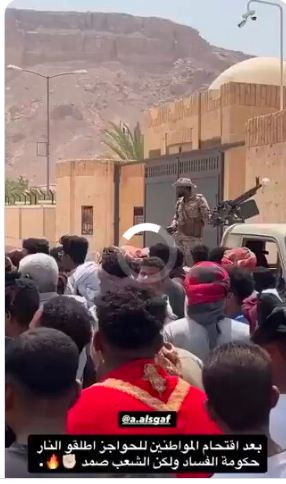
The border regions of Yemen witnessed Saudi-Emirati proxy clashes on Thursday for the first time since the campaign against the Transitional Council began earlier this year.
Exclusive – Al-Khabar Al-Yemeni:
Video clips circulated by activists showed clashes between Saudi factions known as “Homeland Shield” and elements of the Transitional Council.
The clashes broke out following the storming of positions and points of “Homeland Shield” in the city of Seiyun by supporters of the Transitional Council, loyal to the UAE.
“Homeland Shield” forces opened fire with various weapons in an attempt to disperse the Transitional Council crowds who flooded the city’s streets to commemorate what is known as the “Disengagement” anniversary.
Seiyun is the second city on the Saudi border to witness a new uprising by Emirati factions within days, as Transitional Council gunmen had previously raised secession flags at positions and points belonging to Saudi factions in the neighboring Mahrah governorate.
The demonstration is a strong blow to Saudi Arabia, which had launched a campaign to oust the Transitional Council and other Emirati forces from the neighboring Hadramout governorate, and is an indication of the continued Emirati influence despite what its forces have been subjected to in recent months.
Hezbollah announces the execution of 26 operations against the “Israeli” occupation forces in southern Lebanon within 24 hours

The Islamic Resistance announced on Thursday the execution of 26 military operations against sites, gatherings, and vehicles of the Israeli army in southern Lebanon, in response to the occupation entity’s breaches of the ceasefire agreement and the aggressions that targeted civilians and southern villages.
Follow-ups – Al-Khabar Al-Yemeni:
In a series of military statements, the Resistance stated that the operations were carried out between Tuesday evening and Thursday dawn and included targeting occupation military sites, barracks, gatherings of soldiers and vehicles, as well as targeting “Merkava” tanks and military bulldozers using missiles and suicide drones.
It explained that the operations began on Tuesday evening with targeting the Ajl Hill site, Avivim, Rameem, Ramot Naftali, and Ma’ale Golani barracks with swarms of suicide drones, followed by successive operations targeting Israeli gatherings and vehicles in the towns of Rashaf, Dibel, Shama, Deir Siryan, Naqoura, and Al-Bayada.
It also indicated carrying out confrontation operations against Israeli forces attempting to advance towards the town of Hadatha, confirming the targeting of a number of “Merkava” tanks and military bulldozers, achieving direct hits, in addition to shelling support gatherings for Israeli forces with repeated rocket barrages.
The Resistance added that on Wednesday evening, it targeted an Israeli “Hermes 450” drone in the airspace of the central sector with a surface-to-air missile.
In two separate statements, the Islamic Resistance announced that after midnight on Thursday, it targeted gatherings of Israeli army vehicles and soldiers in the towns of Dibel and Rashaf at 00:00, and it also targeted another gathering in the town of Al-Bayada at 00:10 with rocket barrages.
The Islamic Resistance affirmed that its operations come “in defense of Lebanon and its people,” and in response to the Israeli aggressions that, according to its statements, have resulted in civilian casualties, including martyrs and wounded, in southern Lebanon.
Hebrew Media: A Hezbollah drone penetrated protection systems and struck the headquarters of the “401” brigade commander
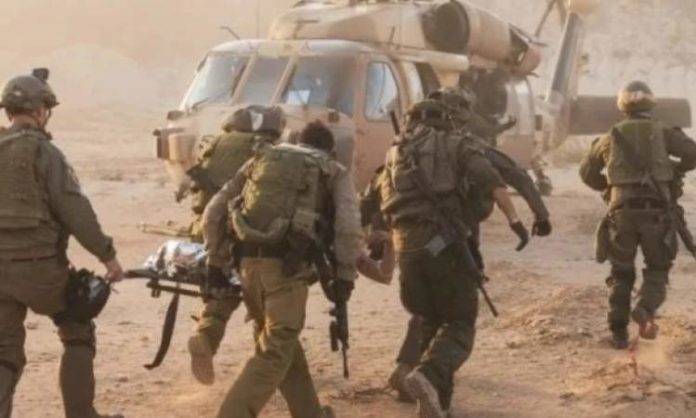
The Israeli occupation entity acknowledged that the commander of the “401” Armored Brigade was seriously injured, along with an officer and a reserve soldier, following an attack carried out by Hezbollah using a booby-trapped drone targeting an Israeli force in southern Lebanon.
Follow-ups – Al-Khabar Al-Yemeni:
Hebrew media reported that the attack occurred on Wednesday morning, when Hezbollah launched a booby-trapped drone towards a force from the “401” Brigade that was inside a building between the towns of Dibel and Hadatha in southern Lebanon.
According to Hebrew “Channel 12,” the officer injured in the incident is the population affairs officer of the “162” division, holding the rank of lieutenant colonel in the reserves, noting that the drone succeeded in penetrating anti-drone protection networks and reaching the brigade commander’s headquarters.
The channel added that the drone exploded near the building’s facade after maneuvering between protection means, causing several soldiers to be injured by shrapnel.
Israeli media described the incident as a “serious security event,” while reports spoke of eight soldiers being injured in the attack.
For its part, the Haaretz newspaper stated that the “401” Brigade commander injured in the operation had assumed his post after the previous brigade commander was killed during battles in Jabalia.
The newspaper acknowledged that the current round of fighting in southern Lebanon is witnessing a notable escalation in the danger of Hezbollah’s booby-trapped drones.
In the same context, Maariv newspaper quoted its military analyst as saying that Hezbollah managed to spot the brigade commander during his visit to an engineering force before targeting him with the drone.
The Walla website reported that the drone that hit the “401” Brigade commander’s headquarters was launched from a distance of between 15 and 20 kilometers.
For its part, Israeli “Channel 13” confirmed that the “401” Brigade commander is the highest-ranking Israeli officer injured in the ongoing battles in southern Lebanon so far.
In a related development, the Islamic Resistance in Lebanon announced that Israeli forces retreated at dawn from the town of Hadatha towards Rashaf after what it described as “heroic” confrontations with occupation forces.
Israeli media also acknowledged the death of a deputy company commander in the “7008” battalion during clashes with Hezbollah fighters, raising the number of Israeli army deaths since the start of the current round of fighting on the northern front to 21.
الإمارات وإيران: لماذا طفح الكيان وخرج العداء إلى العلن وثم المواجهة؟